Same Day Sourdough Bread Recipe
Introduction
Making sourdough bread can seem like a long process, but this same-day sourdough recipe speeds things up without sacrificing flavor or texture. With just a few simple ingredients and some patience, you’ll have a delicious loaf fresh from your oven in under a day.
Ingredients
- 410 grams all-purpose flour
- 290 grams water
- 160 grams sourdough starter
- 8 grams salt
Instructions
- Step 1: In a large bowl, mix together the water, sourdough starter, and salt until evenly combined. This helps disperse the starter and salt throughout the water.
- Step 2: Add the flour to the bowl and mix well using a spoon. Finish mixing with your hands to break up any lumps of flour. Cover the bowl airtight with plastic wrap, foil, a plastic bag, or a shower cap, and let the dough rest for 30 minutes.
- Step 3: After resting, perform a set of stretch and folds: grab the edge of the dough, stretch it up, and fold it under on the opposite side. Rotate the bowl 90 degrees and repeat this process three more times for a total of four folds. Cover the dough again and let it rest for 20 minutes.
- Step 4: Repeat the stretch and fold process followed by a 20-minute rest until you have completed four sets in total, which should take about 1 hour. Be sure to keep the dough covered to prevent drying.
- Step 5: After your final fold, cover the dough and let it rise at room temperature for 3 to 4 hours. The dough should nearly double in size during this bulk fermentation.
- Step 6: Turn the dough out onto a lightly floured surface. Shape the dough by pinching opposite edges together on top, then repeat with the other two sides to form a tight ball.
- Step 7: Prepare a bread basket or banneton lined with a lightly floured tea towel. Place the dough seam-side up into the basket. Use a dough scraper if the dough is too soft or sticky to handle easily.
- Step 8: Cover the dough with an airtight cover and let it rise for 2 hours at room temperature. Begin preheating your oven about an hour before baking.
- Step 9: Once the dough has puffed up, transfer it onto a piece of parchment paper, flipping it so the floured bottom is now on top. Score the dough with two deep cuts in a cross pattern using a razor blade or sharp knife.
- Step 10: Place the parchment paper and dough into a preheated Dutch oven. Splash a little water inside to create steam, cover with the lid, and bake at 460°F (238°C) for 30 minutes. Remove the lid and bake for an additional 10 minutes at 440°F (227°C) to brown the crust. Allow the bread to cool on a rack, covered with a damp towel, for at least an hour before slicing.
Tips & Variations
- Use a kitchen scale to measure ingredients accurately for consistent results.
- If you don’t have a Dutch oven, bake the bread on a preheated baking stone and use a pan of water to create steam.
- Experiment with adding herbs, garlic, or olives for flavored sourdough variations.
- Be gentle when handling the dough during shaping to maintain air bubbles for a lighter crumb.
Storage
Store sourdough bread wrapped in a paper bag or cotton bread bag at room temperature for up to two days to keep the crust crisp. For longer storage, slice and freeze the bread in an airtight container for up to 3 months. Reheat frozen slices in a toaster or oven for best texture.
How to Serve
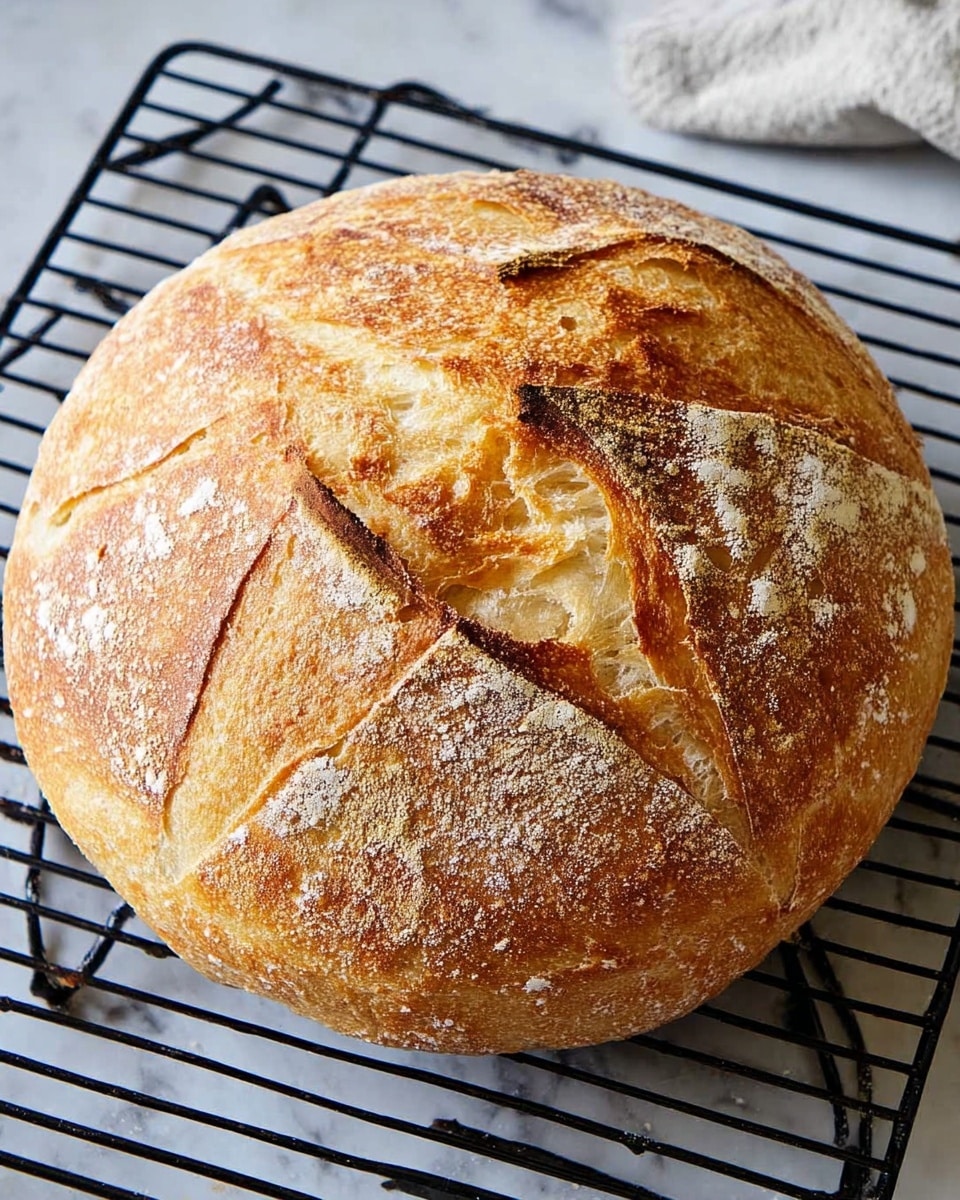
Serve this delicious recipe with your favorite sides.
FAQs
Can I use whole wheat flour instead of all-purpose flour?
Yes, you can substitute whole wheat flour for all or part of the all-purpose flour. Keep in mind whole wheat absorbs more water, so you may need to adjust the hydration slightly and the bread will have a denser crumb.
What if my sourdough starter is not very active?
An inactive starter can result in slower fermentation and less rise. To improve activity, feed your starter regularly for several days at room temperature before baking. Make sure it bubbles and doubles in volume within 4-6 hours after feeding.
Print
Same Day Sourdough Bread Recipe
- Total Time: 8 hours 15 minutes
- Yield: 1 large loaf (approximately 15 servings) 1x
Description
This Same Day Sourdough Bread recipe delivers a rustic, crusty loaf with a tender crumb using a simple mix of flour, water, starter, and salt. Through a process of mixing, stretch and folds, bulk fermentation, shaping, and baking in a preheated Dutch oven, you can enjoy freshly baked sourdough bread in just over 8 hours. The method ensures a deep flavor and beautiful crust with minimal hands-on time.
Ingredients
Ingredients
- 410 grams all-purpose flour
- 290 grams water
- 160 grams sourdough starter
- 8 grams salt
Instructions
- Mix starter, water, and salt: In a large bowl, combine the water, sourdough starter, and salt, mixing well to allow even dispersion of the salt and starter in the water.
- Add flour and rest: Add the all-purpose flour to the mixture and mix thoroughly, first with a spoon, then finish by hand to break up any flour lumps. Cover the bowl with airtight wrap and let it rest for 30 minutes to hydrate the flour.
- Perform stretch and folds: After resting, stretch and fold the dough by grabbing an edge, stretching it upwards, and folding it underneath the dough. Rotate the bowl 90 degrees and repeat three more times for a total of four stretch and folds. Cover and rest for 20 minutes.
- Repeat stretch and folds: Continue the stretch and fold process every 20 minutes for a total of four sets (about one hour), covering the dough between each to prevent drying.
- Bulk fermentation: After the last set of stretch and folds, cover the dough again and let it rise at room temperature for 3 to 4 hours until nearly doubled in size.
- Shape the dough: Transfer the dough to a lightly floured surface and shape by pinching opposite ends together on top. Repeat with the other two ends to form a tight dough ball.
- Prepare bread basket: Line a banneton or bread basket with a lightly floured tea towel and place the shaped dough inside, seam side or pinched parts facing upwards. Use a dough scraper if needed to help transfer.
- Final proofing: Cover the basket with an airtight cover and allow the dough to rise for 2 hours at room temperature. Preheat the oven about one hour into this step.
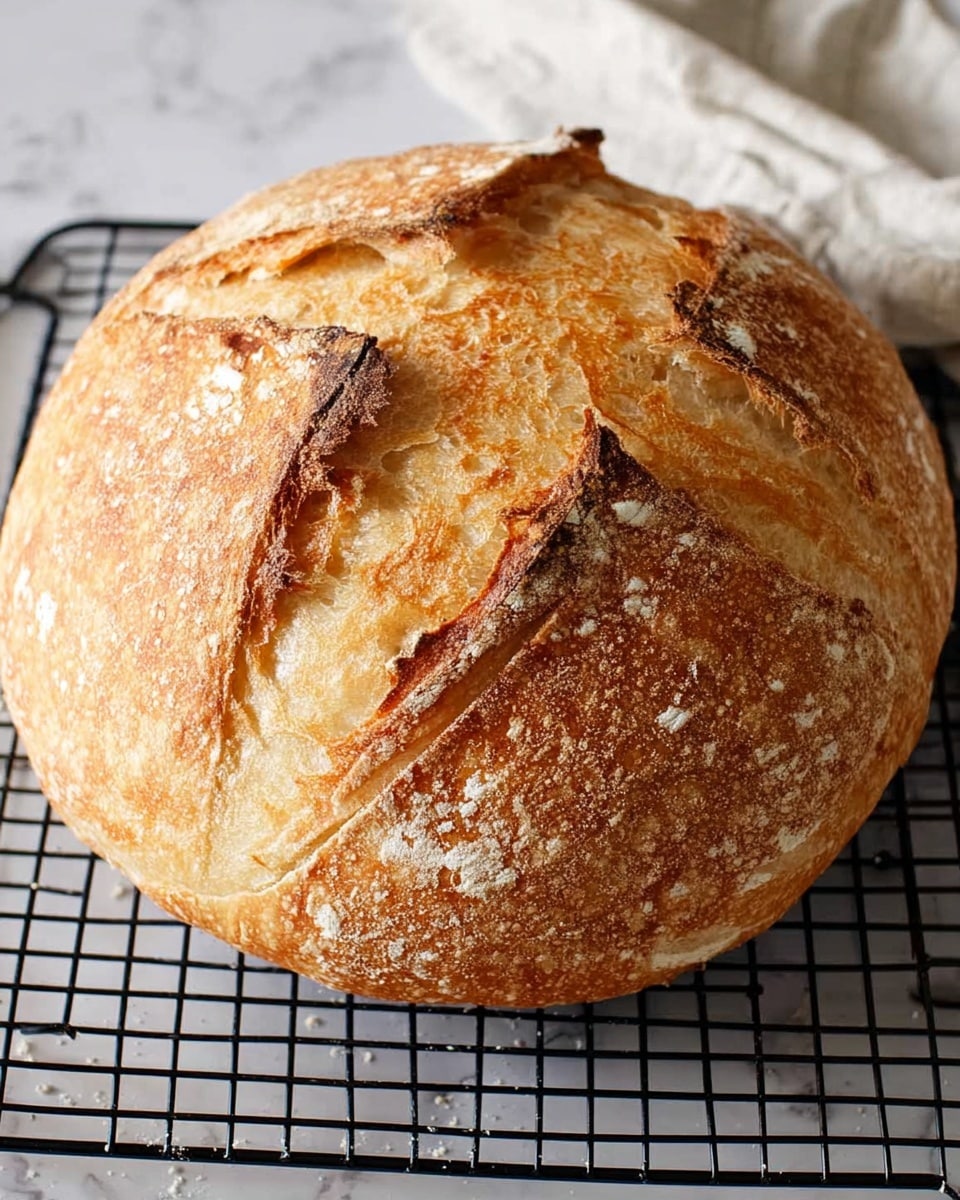
- Score the dough: Once puffed, transfer the dough with parchment paper onto a flat surface, flipping so the bottom becomes the top. Score the dough with two deep cuts crossing each other to create a crisis cross pattern.
- Bake in Dutch oven: Place the dough with parchment paper into the hot Dutch oven. Add a splash of water between parchment and pot to create steam, then cover quickly. Bake at 460°F (238°C) for 30 minutes with the lid on, then remove the lid and bake for another 10 minutes at 440°F (227°C) until golden brown.
- Cool and serve: Remove the bread from the oven, place it on a cooling rack, and cover with a damp towel. Let cool for at least one hour before slicing to finish the crumb development and avoid gummy texture.
Notes
- Use a plastic bag or plastic wrap to cover dough between stretch and folds to prevent drying.
- Preheat your Dutch oven with the oven to ensure the crust crisps properly.
- The scoring pattern helps control oven spring and gives the loaf its signature look.
- Cooling the bread fully is essential for the crumb to set properly.
- Baking times may vary slightly based on your oven’s heat retention and accuracy.
- Prep Time: 1 hour 10 minutes
- Cook Time: 40 minutes
- Category: Bread
- Method: Baking
- Cuisine: French/European
Keywords: sourdough, bread, baking, homemade bread, artisan bread, bread recipe